CerrarCerrar
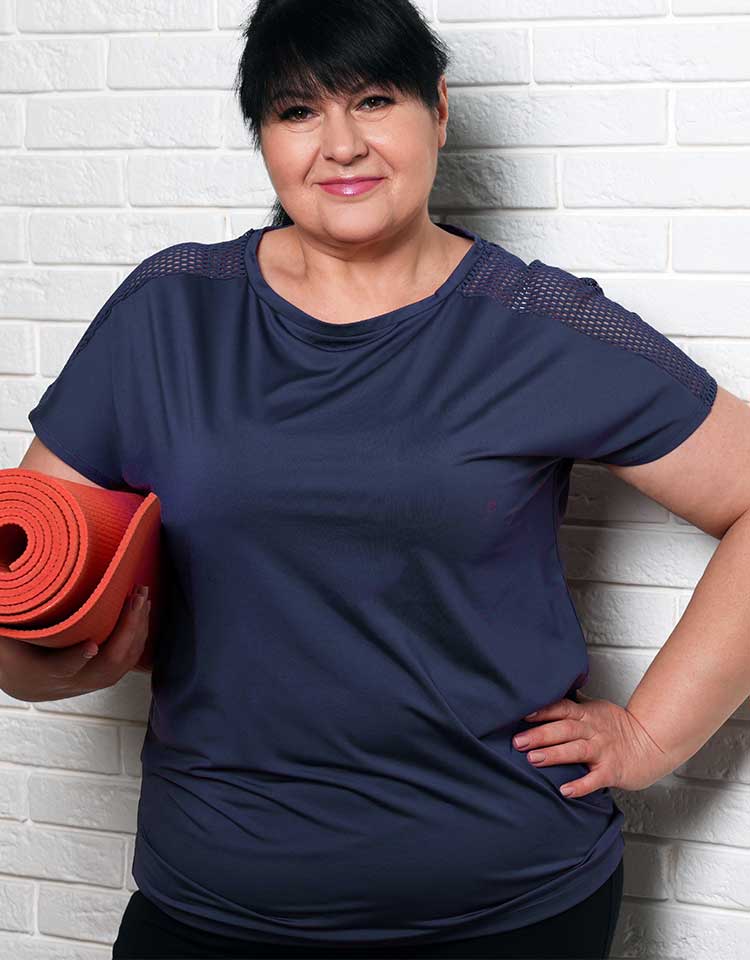
May is Women's Health Month, and if you're like most women, your own health is probably the last thing on your list. You're the one making sure everyone else gets to their appointments, eats well, and gets enough sleep. You're managing the household, keeping track of everyone's needs, and somewhere in the middle of all of that, you've gotten pretty good at ignoring the signals your own body is sending you.
That's exactly why Women's Health Month was created. So many women deal with exhaustion, weight gain, and that general feeling of not being themselves anymore, and most of them write it off as age or stress, or ignore it completely. But many of those experiences have real biological explanations. Research shows that women are diagnosed later than men across more than 700 different conditions, and the conditions affecting women uniquely have long been underfunded and underserved in research and care. If you've been struggling with your weight, trying to make sense of a PCOS or pre-diabetes diagnosis, or noticing that your energy isn't what it used to be, there's likely more going on than anyone has taken the time to explain to you.
When a woman is eating well, staying active, and still not seeing results, it's rarely a willpower problem. It's almost always a hormone problem. Insulin tells your cells what to do with blood sugar, cortisol shapes whether you store fat or burn it, leptin signals fullness, and ghrelin drives hunger. When these systems are working well together, maintaining weight feels manageable, and when they're off, you can feel like you're working incredibly hard just to stay in place.

This picture gets more complicated over time. Estrogen and progesterone shift across the menstrual cycle and decline significantly during perimenopause and menopause, interacting with insulin and cortisol in ways that directly affect where your body stores fat and how easily it accumulates. Women are also more likely to experience thyroid dysfunction, polycystic ovary syndrome, and insulin resistance, and each of those conditions adds another layer to an already complicated system. Conventional diet advice treats the body as a simple math equation. But when the underlying hormonal system is working against you, effort alone often isn't enough.
Polycystic ovary syndrome affects an estimated 10% to 13% of women of reproductive age, making it one of the most common hormonal conditions out there, and up to 70% of those women don't even know they have it. Many spend years feeling tired, gaining weight around the midsection, and dealing with irregular cycles, only to be told their labs look fine. A growing scientific consensus is emerging that PCOS should be understood and treated as a metabolic disorder as much as a reproductive one, because at its core, most cases involve insulin resistance. The body produces insulin, but cells don't respond to it efficiently, so blood sugar stays elevated, insulin levels rise further, and the resulting hormonal cascade affects ovulation, androgen levels, fat storage, and inflammation.
Even for women without a PCOS diagnosis, insulin resistance is increasingly common and frequently goes undetected. Women in their 40s and 50s are particularly affected because declining estrogen during perimenopause reduces insulin sensitivity, and research shows that hormonal changes at menopause significantly increase insulin resistance risk, with meaningful effects on cardiometabolic health.
If you're in your 40s, 50s, or 60s and feel like your body quietly rewrote the rules on you, you're not imagining it. According to the North American Menopause Society, 65% to 75% of perimenopausal women experience fatigue ranging from mild tiredness to exhaustion that doesn't resolve with rest. Sleep disruption plays a significant role in this, with 70% to 80% of women reporting sleep disturbances during the menopausal transition, which raise cortisol, disrupt hunger hormones, and leave many women feeling depleted regardless of how much time they spend in bed.
Estrogen plays a meaningful role in mitochondrial function, the energy-producing machinery inside your cells, and as it declines, those cells can become less efficient at generating energy. Muscle mass also naturally decreases with age, and because muscle is metabolically active tissue, less of it means a slower resting metabolism, less stable blood sugar, and fewer physical reserves for daily life. This is why strength training becomes especially valuable for women over 40, supporting energy, bone density, and longevity alongside weight management, and why many women who receive care that accounts for their hormonal reality report feeling more energized and stronger than they have in years.

GLP-1 receptor agonist medications have opened up real possibilities for people whose biology has been making weight management harder than it should be, and for women navigating hormonal and metabolic challenges, they're particularly worth understanding. GLP-1 is a hormone your gut naturally produces in response to eating, signaling to your brain that you're full, slowing gastric emptying, and helping regulate insulin release after meals. Medications like semaglutide and tirzepatide mimic this hormone, amplifying signals that many women's bodies may be producing less efficiently due to insulin resistance or hormonal shifts.
For women with PCOS, the clinical picture is encouraging, with one important caveat: GLP-1 medications aren't FDA-approved specifically for PCOS. Their use in this context is off-label, and whether treatment is appropriate depends on your individual health history and a full evaluation by a licensed provider. That said, real-world prescribing data is telling. GLP-1 prescriptions among women with PCOS increased more than sevenfold between 2021 and 2025, largely among women who also had obesity or insulin resistance, and clinicians are reporting meaningful improvements in weight, blood glucose control, and menstrual regularity along the way. In one early clinical study, nearly 80% of obese PCOS patients treated with low-dose semaglutide achieved at least a 5% reduction in body weight, with many also seeing improvements in blood glucose and cycle regularity. For women in perimenopause and beyond, GLP-1 treatment can help address visceral fat accumulation that hormonal changes tend to promote, particularly around the abdomen where it carries the greatest cardiovascular risk. Many patients also describe a quieting of persistent food cravings that makes it easier to eat in ways that feel natural and sustainable. These medications work best alongside adequate protein, regular physical activity, and good sleep, and for women whose biology has been creating extra resistance, they can be the piece that makes consistent progress genuinely possible.
So many women spend years being told their symptoms are normal, their labs are fine, and they just need to try harder. At VitalCore Health, our licensed medical providers take the time to understand your full health picture, including your hormonal context, your history, and your goals, before determining whether GLP-1 treatment may be appropriate for you. When a prescription is the right fit, it's fulfilled through a licensed pharmacy. This is provider-guided care that takes your biology as seriously as you do. When you're ready to find out if treatment is right for you, we're here.
This content is for educational purposes only and is not medical advice. Consult a licensed healthcare provider before making any changes to your health care or treatment. VitalCore Health is a telehealth platform that connects patients with licensed healthcare providers. Treatment decisions, including whether medication is appropriate, are made solely by a licensed provider following individual evaluation. Individual results vary.